Thursday, February 28, 2013

Drug Cannons and Drones

Multi-barrel drug cannon - for those who are serious about launching the
largest number of loads over the fence in the shortest amount of time.
The truck mounted home made cannon pictured below will fire a 30 pound projectile over the US/Mexico Border Fence. Usually it fires packets of marijuana, but you could also fire cocaine, methamphetamine or cocaine over the fence. Physics is no respecter of narcotics. In the past when the narcos needed to fire cocaine, it was packaged in a hard plastic container and because of the weight of the container, it would fire no more than ten pounds at a shot.

Marijuana Cannon - designed to defeat the Border Fence
Police told the Televisa network that the device was made up of a plastic pipe and a crude metal tank that used compressed air from the engine of an old car 

The apparatus fired cylinders packed with drugs that weighed as much as 13 kilos, police said. It was confiscated last week after US officers told Mexican police that they had been confiscating a 16px number of drug packages that appeared to have been fired over the border.
Before long, ambitious cartel members will begin to fly unmanned drone aircraft from Mexico into the US, packed with high value narcotics. Up to now, drone aircraft have been the prerogative of the Customs and Border Protection Service, and the narcos flew radar resistant ultralight aircraft across the fence, loaded with cocaine. Once landed, the small aircraft were abandoned.

That's changing along with changing technology. Drone aircraft technology has made it from the hangers of the world's superpowers into the garages of the powerful and very wealthy drug cartels. The concept is that drug drones could be reused and would not depend on a drug pilot flying an ultralight. Ultralight aircraft are more heavily influenced by weather than the larger and more robust drones that can drop a load of narcotics very accurately using GPS technology.

Working from US, European and Israeli designs, aeronautical engineers in Mexico and Latin America have been hard at work to find a drone that can be transported quickly by truck, launched and recovered and subsequently moved and has enough payload weight to meet the needs of their employers (Sinaloa Federation).

Anyone who can build a hobby aircraft successfully has all of the tools to ramp up the dimensions and integrate control technology to build a workable drone. In the case of Cartel Drones, the wings need to fold up so that it will fit in a semi-truck both before and after flight so that it can be serviced, reloaded and flown from another site.

One narco that I spoke to who is familiar with this program said that it's a lot easier and less expensive than running a drug submarine - but the submarines carry a much more substantial narcotics load than the drones do. However, you can build and operate two dozen drone aircraft for the price of one submarine. The swarm effect also makes it unlikely that more than one at most will be apprehended by American law enforcement at any one time. The assembly line for narcotics drones is located in the Santa Fe District of Mexico City and near the Bombardier factory at Queretaro where aircraft factory workers can moonlight and double their money.

A rumor persists that NSA has collected a body of information on this narco drone effort, collected under RAGTIME, but it has yet to be confirmed.


Monday, February 25, 2013

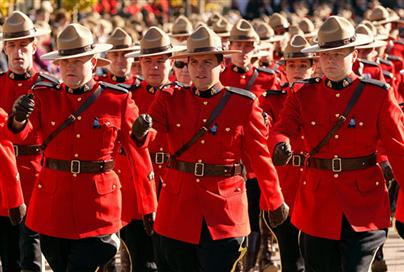
Assist to the Royal Canadian Mounted Police

This is a very brief investigative primer for any Canadian authorities who are looking for Mexican cartel operators within their country. I doubt that any RCMP types will read this blog, but if they do, they can consider this.

Joaquin Guzman Loera (El Chapo) is running the majority of the Canadian Traffic from the Mexican side of things. There were cells of Los Caballeros Templario (based in Washington State, US) but now that they're allies, I'm lumping them into one big pot.

This is important to know, because Chapo is a micromanager. He didn't last as long as he has nor grow in both personal wealth and power through the hemisphere by being stupid. Which means that they won't be making mistakes that the bush league narcos make. 

If you're accustomed to working on Asian targets (who almost religiously follow the same low key profile), you're going to feel at home working on these cartels.

Automobiles - Don't expect to see these guys driving around in Ferraris. The vehicle of choice for running around and being cool is usually the pick-up truck. They will also drive nondescript sedans simply because they don't attract attention. However, because they're from Sinaloa for the most part, you will see "Sinaloa Crap" on the cars. Stickers, Virgin of Guadalupe or Santa Muerte statues. You need to learn the difference between the two. Regular Catholic Mexicans usually have the Virgin of Guadalupe icons on their dash. If you find anything to do with Senora de los Sombras, Nino Negro Santa or the Holy Death (Santa Muerte) (different names for the same saint), you have a narco on your hands.

Restaurants - Everyone wants food and culture that reminds them of home close at hand. They need a place to hide in plain sight and the leaders want to hold court. So you'll find some really good Mexican restaurants popping up. Remember, it doesn't need to be a hole in the wall because these cartels have a lot of money to spend. Look for Sinaloa, Jalisco or Michoacan style cooking. If you can't tell the difference between Sonora, Quintana Roo and Jalisco style cooking - do your homework. They will hang out where they are comfortable.

Homes - They will live well and they will live on land with a buffer around it. They will have ranches and those ranches will have runways cut on them. Expect over ten ranches in any area where the narcos are active. They'll set them up with equipment, barns, sorting pens for livestock, etc. and they will leave them dormant until they're needed. Usually one one will be active at a time. That's just how they roll. It's a shell game.

Clothing - The well healed narcos will dress 'Mexican upscale casual' - short hair, expensive dress shirt, usually worn outside (not tucked in), nice slacks and nice shoes. The Sinaloa Cowboys, who work on the ranches (bottom feeders) will dress the way that they did when they were home. Do some homework on those dress patterns. These guys won't deviate from what they are comfortable wearing.

Family Life - Most wealthy Mexican men have more than one wife. The wealthier and more powerful, the more wives. It's not uncommon for a narco to have one Casa Grande (the first wife) and half a dozen Casa Chicas (the subsequent girlfriend). Mexicans don't wear condoms so those women all have children. Alert your family support people to keep a sharp eye out for women from Mexico who apply for welfare benefits and aid for their children. They almost all will. Narcos have money but they are cheap in terms of spending that money on the Casa Chicas. This information can be exploited and it's possibly the best single method of finding out who the narcos are. Hell hath no fury like a woman scorned.

Mexican Weddings - Track them, cover them, photograph the people who show up, collect license plate numbers. They are political affairs within the community and they are LARGE. It will help you to understand who is there. The important people will usually travel in Humvees or Suburbans. Some may be armored - but I'm not sure that they have a lot of armored vehicles in Canada. If you find one, the occupant is important.

Good Luck

If anyone wants more they can e-mail me. If you do e-mail me, please provide your RCMP/Law Enforcement affiliation because I will vet you before I contact you.


Friday, February 22, 2013

Mexican Threat to Canadian Security

This blog has outlined the development of the Sinaloa Federation's presence in Mexico beginning in earnest about two years ago and intensifying ever since then. I'm not going to rehash what I've written in this blog. If you're interested enough, you can scroll down and read it to establish that for yourself.

CONTEXT AND PRECEDENCE

1. Immigration

Mexican Immigration to Canada in 2005 was the first phase of the establishment of the Mexican drug trade that we are seeing in a mature environment in Canada today. Joaquin Guzman Loera (El Chapo) bought his first ranch in Mexico in 2005. Mexican citizens began to enter Canada 'fearing for their lives' and were accepted by the Canadian government as refugees. This trend continued unabated until July 2009, when the Canadian Government instituted a requirement that Mexican citizens traveling to Canada obtain a visa.  Mexican refugee claimants, represent 25% of the total Canadian asylum petitions. Even though 90% of those are ultimately rejected, refugees/asylum applicants continue to stress the over taxed Canadian system. 

What do cartel members awaiting adjudication from Canadian authorities do while on parole status? They traffic narcotics and receive public assistance payments from a generous and naive Canadian system.

2. Trafficking Trends

Historically, the primary conduit for the conduct of the smuggling operations were well organized Asian gangs on the Canadian side of the border. That balance tipped beginning in 2010 when very well trained, experienced Mexican traffickers entered the business of trafficking through Canada into the US began to switch on. Canada is the path of least resistance. Canada is also not the market. Canada has 34 million citizens. California alone has 38 million residents. The drug cartels will sell to Canadians, but the market is a small fraction of the size of the US so cocaine, methamphetamine products and opiates bound for Canada usually re-enter the US.

3. Kind and Gentle Canada

Canada is no stranger to organized crime. Their efforts against motorcycle gangs, the Italian Mafia, and more recently in their history, against Asian gangs has been moderately effective. They are NOT ready for the destabilizing effect on society that is being fashioned by highly-organized, violent criminal cartels from Mexico. 

Many drug cartels, including the Sinaloa Federation use contract intelligence people from the former Soviet Union including Ukranian GRU and KGB operators. They are not Asian gangs and they are not bikers. They are PROFESSIONALS. Canada isn't ready. Reliance on USGOV agencies such as the FBI or the Customs and Border Protection Service is thin because they themselves are ham handed when it comes to interdicting or impacting drug cartels. The US track record is not impressive.

4. Impact on Legal Trade

The US has begun to react to the new threat from Mexican Cartels moving narcotics through Canada by "thickening" their border defenses. Trade between Canada and the US has decreased by twenty percent over the past five years. Part of this is due to the security barriers that also impact legitimate trade by simply making it 'harder' to do business. And I'm not only writing about this difficulty, I've experienced it. 

TODAY

DDG 283 HMCS Algonquin
Canada has participated in the North American Maritime Security Initiative (NAMSI) and last year the HMCS Algonquin participated in counternarcotics patrol work in the US Mexico Pacific Border area. It was a symbolic step (at best). None of it addressed the endemic corruption in Mexico and the folly of relying on Mexican Navy (SEMAR) allies for accurate and timely support. That's not to say that all of SEMAR is corrupt. It's not. Enough is to make it (and the rest of MEXGOV) unreliable (I'm trying to be kind here).

Canada is trying to implement a species of trilateral security to protect its interests and while that is the only way to proceed, what they are doing is not having ANY impact on the Sinaloa Federation's operations within its borders. The Canadians need to up their game if they want to play in the big leagues.

The only game in town is HUMINT. It's expensive, it's exhausting, it's difficult, but no other method is likely to work. The RCMP won't be able tell the players without a program and Canada either enters the Great Game or they reap the whirlwind. 


The Sinaloa Federation - LCT Alliance

SITREP

Joaquin Guzman Loera (El Chapo) has a long standing relationship with MEXGOV, but he paid off primarily SEGOB and SEDENA. He had Mexican Army liaisons with him almost all of the time and Gobernacion people with him some of the time to fend off unwanted inquiries. 

Times change and politics changes. Since Enrique Pena took office, there has been a systematic purge of the old guard at PRI and the young turks have replaced them. El Chapo is now going it alone without the top cover that he's grown accustomed to. 

El Chapo and his partner, Ismael Zambada (El Mayo) have split the sheets with Cartel Nueva Generacion Jalisco and El Mencho. The Sinaloa Federation is trimming down and is getting ready to operate under a new paradigm.

The New Sinaloa Federation

As part of the Sinaloa Federation's restructure, El Chapo has joined with Los Caballeros Templarios (LCT) and is allied with key figures within Los Kaibiles de Guatemala (Guatemalan Special Forces). Thus, his strength in Southern Mexico is profound. Much of their methamphetamines and opiate products are now streaming into the marketplace (USA) by way of Canada. Chapo is proportionately as strong in Canada as he is along the US Border. The Arellano Felix Organization was folded completely into El Chapo's new Sinaloa Federation and he has a strong grip on the border from the Pacific Ocean to New Mexico.

MEXGOV Reaction

Because the rapprochement with the Sinaloa Federation has gone, MEXGOV wants to put pressure on them to crush them. 

Example of MANPAD damage to a
civilian aircraft.
El Chapo's Reaction to the MEXGOV Reaction

El Chapo has decided to up the ante. One of those moves is to provide the Sinaloa Federation with protection against MEXGOV rotorcraft and low flying aircraft. He turned to Guatemala (site of the shoot-out yesterday) to purchase Man Portable Air Defense Systems (MANPADS) - surface to air missiles. He couldn't lay his hands on the latest generation of MANPAD, but the Chinese FN-6 is good enough to eliminate the threat that MEXGOV can present from the air to cartels operating in the field.


New MEXGOV Philosophy

For a very long time, the Mexican Government has been paid by drug cartels for the right to move narcotics through "plazas" as the drugs make their way to "the customer/consumer" - the USA. This resulted in unacceptable violence. Today MEXGOV plans to cut out the middle man and handle the business themselves. It brings more profit to PRI's new young turks and they can do it without encountering the problem of violence between competing cartels. Or at least that's the plan.


Tuesday, February 19, 2013

Cartels with MANPADS

Joaquin Guzman Loera (El Chapo) is in Guatemala today, checking out his new weapons with his allies in the Guatemalan military (los Kaibiles) and Los Caballeros Templario (LCT).
Man-portable air-defense systems (MANPADS or MPADS) are shoulder launched surface to air missiles which are particularly effective against helicopters. Sources suggest that the FN-6's (Second generation shoulder launched SAM's) have been delivered recently.
Chinese made FN-6 MANPAD
The narcotics cartels in Mexico are changing as MEXGOV is changing its way of managing the narcotics supply to the United States. The old "dinosaurs" in the PRI Party have been or are are being 'castrated' and removed from power to make way for the young turks. 

los Kaibiles, armed by the US and other nations.
El Chapo found himself in a position where his SEDENA bodyguards/reps were being recalled. The same is true with his personal SEGOB detail. So he made a bold move and has built an alliance with LCT - which is being armed to the teeth. The Beltran Leyva Cartel (BLO) made a similar move a couple of years ago with Los Zetas. The alliance worked for a while. But, in fairness, Los Zetas are not the LCT, which enjoys the tacit backing of the Catholic Archdiocese. 

If the Mexican Military/Paramilitary can't fly their helicopters, it removes a key ingredient in their multi-pronged approach to take down significant narco targets. Time to break out the popcorn and see how it all unfolds.

UPDATE:

There is a rumor floating that the Guatemalan military shot Chapo in the border area just south of Chiapas this afternoon at about 1500 HRS (local time).

Saturday, February 2, 2013

US Immigration Reform and Drug Traffic


The Mexican Government is genuinely concerned about it's borders because one of the largest problems that Mexico faces is illegal immigration (from the south). The US Government is not serious because the Democratic Party knows that Mexican people seeking a new home in the USA are likely to vote for that particular political group.

Now that we've cut to the chase, let's delve a bit more deeply into linkage between illegal drug traffic from Mexican cartels and US/Mexico border security and immigration reform.

The 1986 Simpson-Mazzoli Act, signed by President Reagan granted amnesty to the then 3 million illegal immigrants and promised border enforcement. Amnesty came, effective enforcement didn't because at the time, the US Border was a safety valve against the revolution that the Mexican government always fears but hasn't materialized since 1968 when they set armored vehicles on their own people. Discontent Mexicans go north and so long as they have a place to go, the US enjoys a stable regime to the south. Or so it seemed to President Reagan.

Illegal immigration from Mexico has slowed down a lot over the past decade due to a horrible economy in the US and an improving economy in Mexico. There are also the demographics to consider. The population in Mexico is not growing at a rate that will force nearly as many Mexican people north in search of work in the future. 

A secure LOW TECH fence between the US and Mexico would stop something on the order of 50% of the cross border drug traffic from Mexico into the US. It would also stop about 100% of the illegal border crossing.

Are the Americans considering such a fence? 

Apparently not.

Why? (see paragraph one above)

The bipartisan Senate deal reached by the Gang of Eight, led by Democrat Chuck Schumer and Republicans John McCain and Marco Rubio makes illegal immigrants eligible for green cards and, ultimately, citizenship and it additionally grants the right to live and work here openly. Once granted, it will never be revoked.

The US does not need high tech radar blimps, Predator drones, and sophisticated measures to control cross-border illegal immigration or drug traffic from Mexico. They only need a fence. A regular fence. In 2006, Congress $1 billion to construct 53 (out of 2,000) miles of fence. It worked well for the contractors and the triple layer fence near San Diego works.  But it doesn't have to be three layers of razor wire to be effective. It just has to be a genuine FENCE.

Once the fence is complete, THEN allow the 11 million illegal aliens a pathway to citizenship. They're here anyway, many receiving welfare, food stamps and other government hand-outs despite their illegal status.. Make them pay for their ObamaCare the same as everyone else.

The fence will have the additional impact of reducing the flow of drugs -- which means that the cartels will have to find another way to deliver the narcotics, but it will make it more difficult than it is now.


Thursday, January 31, 2013

BATFE Screwed the Pooch in Milwaukee

Another BATFE screw up?

You be the judge.

The Milwaukee Journal Sentinel broke the story today. Fox News followed along with a story of their own. And poorly executed law enforcement work draws Congress in much the same way as other things draw flies.
The Federal Bureau of Alcohol, Tobacco, Firearms and Explosives (BATFE) created a phony storefront, named it Fearless Distributing, staffed it with undercover agents and created a Facebook page that lured people to the location all under the guise of selling clothes and shoes. The ATF agents handed out business cards with a logo similar to the one from the movie “The Expendables” with the words “buy, sell or trade” on them. Once the store was up and running, agents spread the word that Fearless Distributing was willing to buy guns and drugs.
So far, it looks like a typical 'storefront operation' that the federal government loves to run. It's set to get the dumbest of criminals and they cast a wide net. The funding is budgeted as a "Group One" program.  As usual, results matter and money is secondary -- but does it constitute entrapment? Not in a federal courtroom the way it would usually play out in a state court. The agents in one case paid $1,200 for a firearm that would normally sell for between $400 and $700. 

Keystone Cops?

Not yet. But it's coming...
On Sept. 13, 2012, three weapons – including an M-4 machine gun – were stolen from an agent’s parked car. The very next day one of the weapons -- as well as another unrelated one -- were sold back to agents for $1,400. The M-4 and Smith & Wesson 9mm are still unaccounted for.
Senator Charles Grassley responds:
"The Journal Sentinel story reads more like an accounting of the Keystone Cops instead of a federal law enforcement agency," Grassley, ranking member of the Senate Judiciary Committee, said in a statement. "I'll be asking the ATF questions because if the operation was handled as badly as it was reported, it puts yet another major stain on the agency."
David Salkin unknowingly rented his building at 1220 E. Meinecke Ave. to BATFE, from which they ran their sting operation. Burglars broke into the business, ending the operation. Salkin says BATFE owes him $15,000 for damage and unpaid utility bills. The agency has refused to pay.

Typical.

Post Mortem

The Group One undercover operation didn't result in arrests or convictions of major dealers and they didn't take down a gang. $35,000 in merchandise was stolen from the undercover store and a military style machine-gun is now on the streets of Milwaukee. BATFE is in embroiled in a civil lawsuit with David Salkin who says that he's owed $15,000 because of utility bills, holes in the walls, broken doors and damage from an overflowing toilet.
When the 10-month operation was shut down after the burglary, agents and Milwaukee police officers who participated in the sting cleared out the store but left behind a sensitive document that listed names, vehicles and phone numbers of undercover agents.
Oops.
The sting resulted in charges being filed against about 30 people, most for low-level drug sales and gun possession counts. But agents had the wrong person in at least three cases. In one, they charged a man who was in prison - as a result of an earlier ATF case - at the time agents said he was selling drugs to them.
Were the special agents lying, careless or stupid? It looks like Congress will have the last word on that account.
Other cases reveal that the agency's operation was paying such high prices that some defendants bought guns from stores such as Gander Mountain and sold them to the agents for a quick profit. 
Why not? And back to entrapment, were the amounts that the government spent to buy the firearms so great as to entrap? If you can buy them from a store and then sell them to federal agents down the street for double or triple the money, would that lure an financially strapped person to make the deal? Should they go to prison for it?
ATF spokesman Special Agent Robert Schmidt declined to say how much the sting operation cost.
Group One budgets are usually one million dollars. It would be interesting to see how much the budgeted amount that BATFE actually spent.
Milwaukee is among 31 cities where the ATF has dedicated a Violent Crime Impact Team. The teams are supposed to target "hot spots" - small, high-crime areas - and go after the "worst of the worst" violent criminals, according to the agency's Best Practices report
The agency launched the initiative in 2004 and quickly reported "enormous" success. Agency officials touted a drop in firearm-related homicides in pilot cities and credited the $35 million effort with helping local police departments solve other crimes. 
But a U.S. Department of Justice Inspector General's report two years later found no evidence that the teams reduced firearm crimes in the targeted areas. Authors of the report cited "inadequate direction" and "ineffective oversight" by the agency. 
"We found that ATF based its analysis on insufficient data and faulty comparisons," the report stated.
No matter what happens, BATFE or any federal agency will claim success. The US Government has never been long on the truth and there is no reason to see a change of pace here.

Daniel Stiller, head of the federal defender's service in Milwaukee, said such undercover operations are rare. The case involving Gladney and Bryant suggested to him that those defendants weren't major criminals given they got guns from a store, not the street.
"I have to guess a true criminal on the streets of Milwaukee has the ability to obtain a firearm when needed from something other than a store," Stiller said.
I think that most people would agree.
The operation ran into more trouble in October, when burglars broke into the building housing Fearless and cleaned out the ATF operation. 
Late on Oct. 9, burglars made off with jewelry, clothing, auto parts, purses, Nike shoes and more, according to police reports. No one has been charged in the burglary. 
The lease states that the alarm is included in the rent. But shortly after Fearless moved in, Salkin said he told the people running the store he was cutting the phone line, which connected the alarm. He said he assumed they would hook up their own alarm. They did not. 
"You would think the ATF would know that," Salkin said.
We're clearly at the Keystone Cops level at this point in the saga.
Business owner, Salkin, said by going over on the $800 a month utility allotment and damage to walls, doors and carpeting, the ATF owes him about $15,000, which includes a month of lost rent. 
The ATF has balked, saying there was less than $3,200 in damage and telling Salkin to return the security deposit. They told him to file a claim with the federal government and warned him to stop contacting them. 
In an email to Salkin, ATF attorney Patricia Cangemi wrote, "If you continue to contact the Agents after being so advised your contacts may be construed as harassment under the law. Threats or harassment of a Federal Agent is of grave concern. Utilizing the telephone or a computer to perpetrate threats or harassment is also a serious matter."
Wow. One would think that with a million dollar budget, they could afford to clean up after the whole thing went haywire. So much for secrecy.
Turns out, the ATF has weapons stolen or loses them more frequently than the public might think, according to a 2008 report from the Office of the Inspector General with the U.S. Department of Justice. 
In a five-year span from 2002-'07, for example, 76 ATF weapons were stolen, lost or missing, according to the report. That's nearly double the number compared with the FBI and the U.S. Drug Enforcement Administration, when considering rates per 1,000 agents.
Is anyone who has read this far surprised?

If you're really interested, reading the articles that were linked at the top of this page is a good idea. I quoted from the Journal Sentinel (highlighted).

This is the same agency that created Operation Fast and Furious and the same agency that will be getting more and special powers from the President of the United States under his new firearms initiative.

I think that I may move to Mexico just to be safe from well meaning federal agents. 


On the Practice of Lying

In Mexico the army and the federal police water board everyone just to make sure that they have the story straight. (the Mexicans use a bottle of Tihuacan and a filthy rag but it's still water boarding). And while BATFE doesn't do that, they have a real bad habit of lying about damned near everything which means that nobody will trust them even when they assert ---- "we're not lying this time." The Mexicans proudly boast that they torture prisoners and they break. They don't lie about what they do...well not all the time.