Showing posts with label methamphetamine. Show all posts

Tuesday, November 27, 2012

The Methamphetamine Market in France

Mexican Methamphetamine
Mexican methamphetamine has a clearer, glassier appearance than more crudely produced formulas and often resembles ice fragments, usually with a clear or bluish-white color. It often has a smell people compare to ammonia, cat urine or even burning plastic. There was a time when the Mexican cartels had to import meth into Europe, but that is quickly becoming a thing of the past.

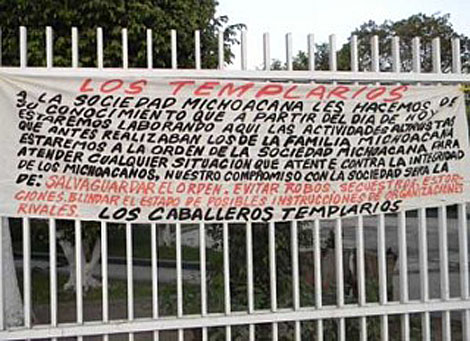
La Familia Michoacan/Los Caballeros Templarios cook in Africa (in five locations) and ship to France, Spain, The Netherlands and Great Britain. The Sinaloa Federation (El Mencho Faction) has done that one better by setting up clandestine laboratories in Europe to service the European market. France is home to some of the larger and more sophisticated cooking operations. I do understand that the French may be insulted by this revelation, but that doesn't change the fact that it's the case.

Having been to Interpol Headquarters (Lyon, France) as a guest on more than one occasion, I understand that France together with The Netherlands (Europol) hosts the international crime fighting efforts against such things. The Mexicans, with a substantial bankroll to back up their expansion, sought out the most corrupt and likely unemployed segment of French society to help them with both security and distribution. Yes, the French Muslim Community was and remains committed to the cause. The vast sea of unemployed inner city youths are both willing and able to help the Mexican drug cartels.
France has a well established, well trained, well paid, and highly professional police force. And if you ask them how all of the methamphetamine (90%+ purity) arrived in their nation, many would tell you that it's smuggled in. That may have been true once. Not so much these days.

The marketing format follows a well-established pattern. By simultaneously increasing the purity and cutting the price, the cartels get people hooked and create a new customer base. By including the locals in the profit making, they expand by forming alliances, taking advantage of existing distribution networks.

Thursday, November 22, 2012

Moving Drugs Down-Under for Fun and Profit

The Australians and New Zealanders seem to have a craving for methamphetamine that has been well established, but now, there's heroin. And it's not the good (and comparatively expensive) China White (#4 Heroin) that's hitting the streets. Mexican Black Tar (#3 Heroin) is making its inexpensive appearance in the slums and among the motorcycle gangs in Australia. Armani Stelio - on behalf of her brother, Sam Ibrahim - founder of Notorious (original gangster), just placed a large order from Los Caballeros Templarios (LCT), grown in Gurrero, refined in Michoacan. Their motto is "Only the dead see the end of war" but #3 heroin will certainly hasten the journey. One would have thought that he'd reach out to his shirt-tail cousins in the Middle East for heroin, but the Mexican version is less expensive and there is a lot less scrutiny at the point of export.

LCT now has a representative cell in Sydney handling the orders so it makes the matter of requesting methamphetamine (ice) or heroin much simpler from Mexican suppliers than it was in the past. Rumors being what they are, Notorious has an interest in selling (not merely using) to boost their profits, to enrich their membership and to expand their reach. Somebody needs to reach out to Detective Tim Chao and let him know that Notorious also plans to expand their sales operation into New Zealand.

Primer on Heroin Manufacture (Appendix: White Powder)

Heroin is derived from the fruit/flower of the opium poppy. In Southeast Asia, the growing season begins in autumn and about 120 days later harvesting can begin (in the spring). Papaver somniferum is one of the few species of poppy that produces opium. The flowers are colorful and vary in hue. Once they fall away, a green pod remains, which continues to grow. Opium alkaloid is only produced during the terminal ripening process, which lasts about two weeks.

While the fruit is still on the stem, incisions are made in the sides of the pod. Common practice requires the sap to seep out of the pod overnight for collection each morning for (roughly) the ensuing week.

Raw opium is converted to morphine base through boiling. The raw sap that was collected from the plant pod dissolves in boiling water and any obvious impurities such as plant fibers are scooped from the liquid opium. Quicklime is mixed with water and is then added to the boiling liquid opium. The morphine alkaloid reacts with the lime and impurities precipitate to the bottom of the pot. The liquid is poured through a filter into another container and ammonia is added and the mixture is heated. As it heats, the morphine solidifies and precipitates to the bottom of the pot. The liquid is separated off from the solid and what remains is #1 Heroin or morphine base. 

The next step in the purification process necessary to create a usable narcotic requires acetic acid to combine with the morphine base. The mixture is heated to 85 degrees centigrade for two hours. This process chemically binds the morphine to the acid and creates chemical heroin.

Water is added to the chemical heroin and since heroin is water-soluble it becomes a solution. Common sodium carbonate is added to the heroin solution and the precipitate is taken from the bottom of the pot. That is #2 Heroin or heroin base.

From heroin base the manufacturer can make #3 Heroin (20 to 30 percent pure), often called brown heroin or smoking heroin. It has the general granular consistency and color of (unrefined) brown sugar. To make #3 Heroin, hydrochloric acid and caffeine are mixed with the heroin base and stirred until it dries. Mexican Heroin, also referred to as “black tar heroin” is essentially crude #3 Heroin with more impurities in it than is typically found in #3 Heroin. The impurities make the drug more toxic but occasionally add a more potent effect (depending on who made it). (Emphasis added)

In order to make #4 Heroin from heroin base, hydrochloric acid and ether are added. The process is complex, toxic and hazardous because of explosive fumes. Once the heroin base passes through this process, it’s usually around 90 per cent pure and is referred to as China White. China White (or #4) Heroin is a fine white odorless and colorless powder.


Monday, October 29, 2012

Arellano Felix - Los Caballeros Templarios Alliance

Arellano Felix Family (back when)
I don't know whether or not the word is out, however, the alliance between the Arellano Felix Organization (AFO) and Los Caballeros Templarios (LCT) does make some sense when you stop and think about it.

Benefits:
  • SUPPLY - Cocaine smuggling is on the decline because it simply doesn't make good financial sense anymore and won't until the demand pushes the price through the roof (if it ever does). Meth is the new coke and AFO doesn't have a reliable lab network to call on for supplies to meet the demand in the US and Canada. LCT does have a substantial lab network in Mexico that churns out tons of methamphetamine each month.
  • SUMGGLLING and DISTRIBUTION - LCT doesn't have an effective distribution network north of the US Border to deal with the supply that they are able to manufacture. AFO has an excellent network that has been in place for a very long time.
  • POLITICAL STROKE - Despite persistent rumors of their demise (including pronouncements by various US Law Enforcement task forces and US Attorneys (Laura), the AFO has a lot of infrastructure and power in Northern Mexico. The LCT does not, but they have stroke in Michoacan and Gurrero where they manufacture meth and tap poppies. In other words, they have the power where they need it if they are the manufacturers. They control the port of Lazlo Cardenas and can bring precursors directly to the labs through that route.
  • THE PLAZA PROBLEM - LCT doesn't need to control plazas (nor buy sanction from MEXGOV to run them) in order to brew and ship methamphetamine (and refine opium) for distribution by AFO.
LCT Narco Mata
One other thing to keep in mind is that the AFO has changed due to pressure from the US and Mexican governments, changing leadership and the reality that the Tijuana Plaza is owned and operated by the Sinaloa Federation. AFO (meaning Luis Francisco Sanchez Arellano) made a conscious decision not to go to war with anyone. They cooperate, collaborate and run their dope in peace because it's more profitable and after all, it is a business.

LCT has regional aspirations, but is generally isolated by its members and its political constituency to remain in the Michoacan (Mexican Interior) region. They do not challenge AFO in any measurable way nor are their ambitions likely to expand to cause friction.
The mandate by the People of Michoacan for LCT to provide some sort of social justice to the people living in the hamlets doesn't interfere with anything AFO has going, six hundred miles to the north.

Thursday, October 11, 2012

Mexican Methamphetamine

Americans are so desensitized to the drug trade that one photo of piles of drums containing precursor chemicals for methamphetamine, seized by Mexican and US officials, looks more less like all the rest. Thus, I won't bother to post a photo of a pile of chemical drums.

Mexican drug cartels are flooding U.S. cities with cheap, extraordinarily pure methamphetamine made in factory-like "super labs” located throughout Mexico. Although Mexican meth is not new to the U.S. drug trade, it now accounts for as much as 80 percent of the meth domestically, according to the Drug Enforcement Administration. And it is as much as 90 percent pure, a level that offers users a faster, more intense and longer-lasting high.

Viewers familiar with the popular television series, BREAKING BAD, have a genuinely accurate view of the meth lab scene, combined with Hollywood drama. The only difference is that the really good stuff is made in Mexico these days. Various cartels expanded into the U.S. meth market very effectively, using the drug pipelines that they previously used for cocaine, heroin and marijuana. 
Mexican meth has a clearer, glassier appearance than more crudely produced formulas and often resembles ice fragments, usually with a clear or bluish-white color. It often has a smell people compare to ammonia, cat urine or even burning plastic.

Seizures of meth along the Southwest border have more than quadrupled.

In terms of raw tonnage, the amount of seized meth jumped from slightly more than 4,000 pounds in 2007 to more than 16,000 pounds in 2011. The Sinaloa Federation, which keeps close tabs on these profit-and-loss numbers feels that somewhere around 8% of the methamphetamine product that they sent north was seized by law enforcement in their pipelines. Once it hits the street distributors, they don't track it. Though I don't have completely reliable numbers from the Sinaloa Federation (only, not considering other cartels), the best numbers I have is that they shipped 1,500 metric tons of methamphetamine products (crystal, ice, etc.) to the United States and Canada to date in 2012.
During that same period, the purity of Mexican meth shot up too, from 39 percent in 2007 to 88 percent by 2011. During that same time, the price fell 69 percent, tumbling from $290 per pure gram to less than $90. (Source: DEA)
The marketing format follows a well-established pattern. By simultaneously increasing the purity and cutting the price, the cartels get people hooked and create a new customer base.

Mexico has tightened laws and regulations on pseudoephedrine and occasionally the cartels have a problem obtaining commercial quantities from India and China. Today they arrive at the ports of Manzanillo and Lazlo Cardenas on the West Coast and they cross the Mexican border from Guatemala.

Some producers shifted their recipe from pseudo ephedrine to P2P, using the organic compound phenylacetone because it's easier to obtain and has some legitimate commercial applications. In 2011, 85 percent of lab samples taken from U.S. meth seizures came from the P2P process - up from 50 percent a little more than a year earlier.
Last year, Mexican authorities made two major busts in the quiet central state of Queretaro, seizing nearly 500 tons of precursor chemicals and 3.4 tons of pure meth with a street value of more than $100 million. In Sinaloa, investigators found a sophisticated underground lab equipped with an elevator and ventilation systems as well as cooking and sleeping facilities. The facility was reachable only by a nearly 100-foot tunnel with its opening concealed under a tractor shed. (Source: Univision)
In February, soldiers in western Mexico made a historic seizure: 15 tons of pure methamphetamine, a haul that could have supplied 13 million doses worth more than $4 billion.

The cocaine pipeline from Colombia to the United States has already been closed for this season and will reopen after the Holiday smuggling break, due to begin mid-January 2013. That is not true of the meth pipeline because it's produced domestically in Mexico and the profit margin is therefore much higher.